Verification Email Not Arriving? Find the Cause and Fix It
A missing code can be refused, delayed, filtered or silently dropped. How to tell which happened, from the people who run a mail server, and what fixes each one.
Read more
Written by the engineers who run PureTempMail's mail servers: when a throwaway address helps, when it backfires, and what happens to a message after it arrives.
We run an inbound-only mail service, so we see what lands in a fresh address minutes after someone signs up for a newsletter. These articles turn that view into practical advice, and each one says where a disposable address is the wrong tool as plainly as where it is the right one.
When a throwaway inbox fits, how to sign up with one, and what to do before it expires.
A missing code can be refused, delayed, filtered or silently dropped. How to tell which happened, from the people who run a mail server, and what fixes each one.
The safe order for changing an account's email while your temporary inbox is still live, how to test the change, and what to do if the site has no such option.

A manual test run, a 12-point checklist and the real limits of a temp inbox for QA, plus the tools to use when the test needs automation or secrets.

A three-question test you can run on any sign-up form, then real scenarios sorted into good fit, think twice and never, from Wi-Fi portals to tax accounts.
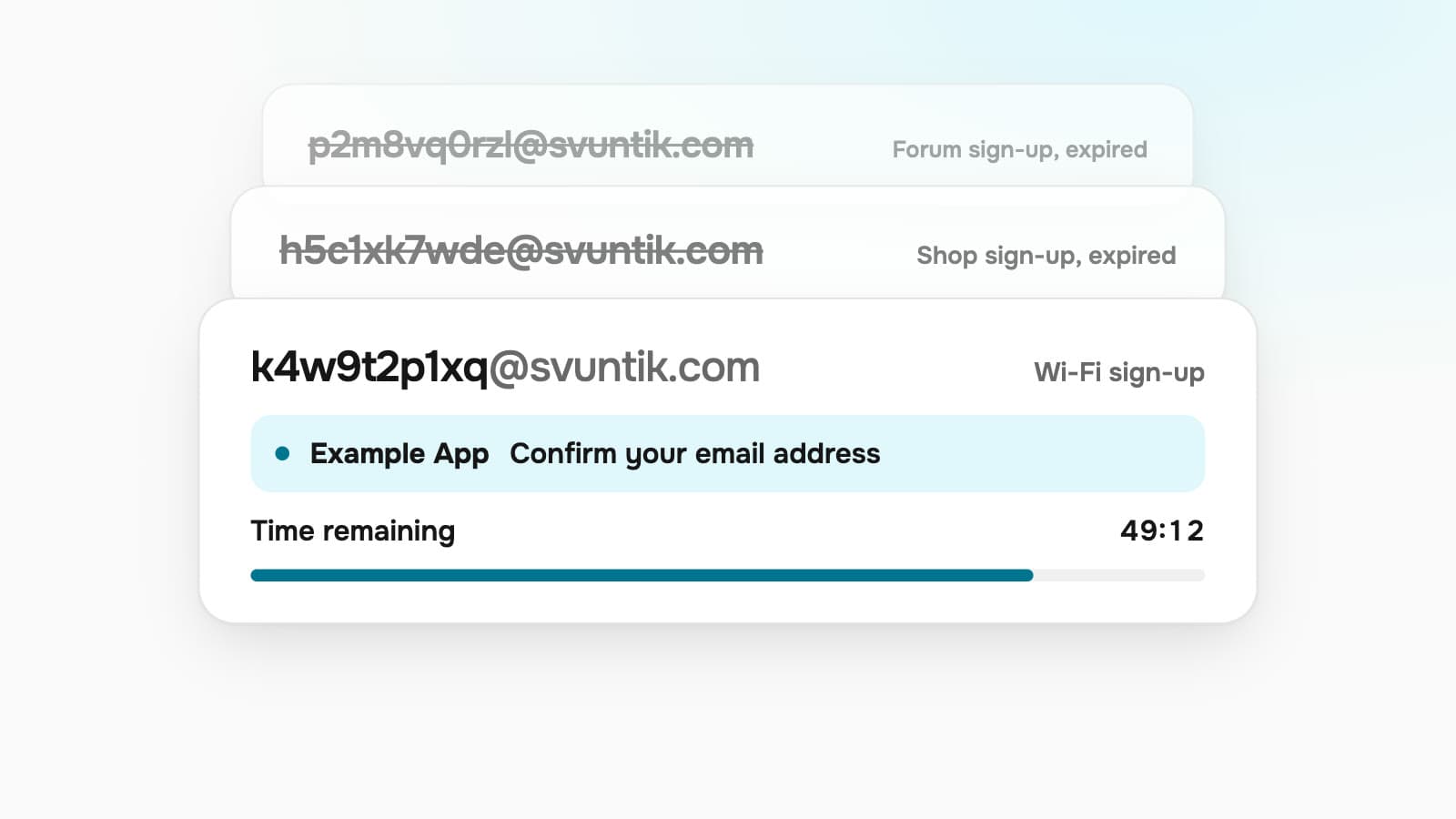
What a burner email is, what a burner address is made of, the four kinds you will run into, and which common beliefs about them are wrong.

A step-by-step walkthrough of signing up with a temporary address, what you should see at each step, and fixes for codes that never arrive.

Disposable email for online shopping, stage by stage: where a temp inbox blocks retail spam, and where receipts, returns and warranties need a lasting address.
How your address leaks, how to find out where it leaked, and the tools that keep your main inbox quiet.
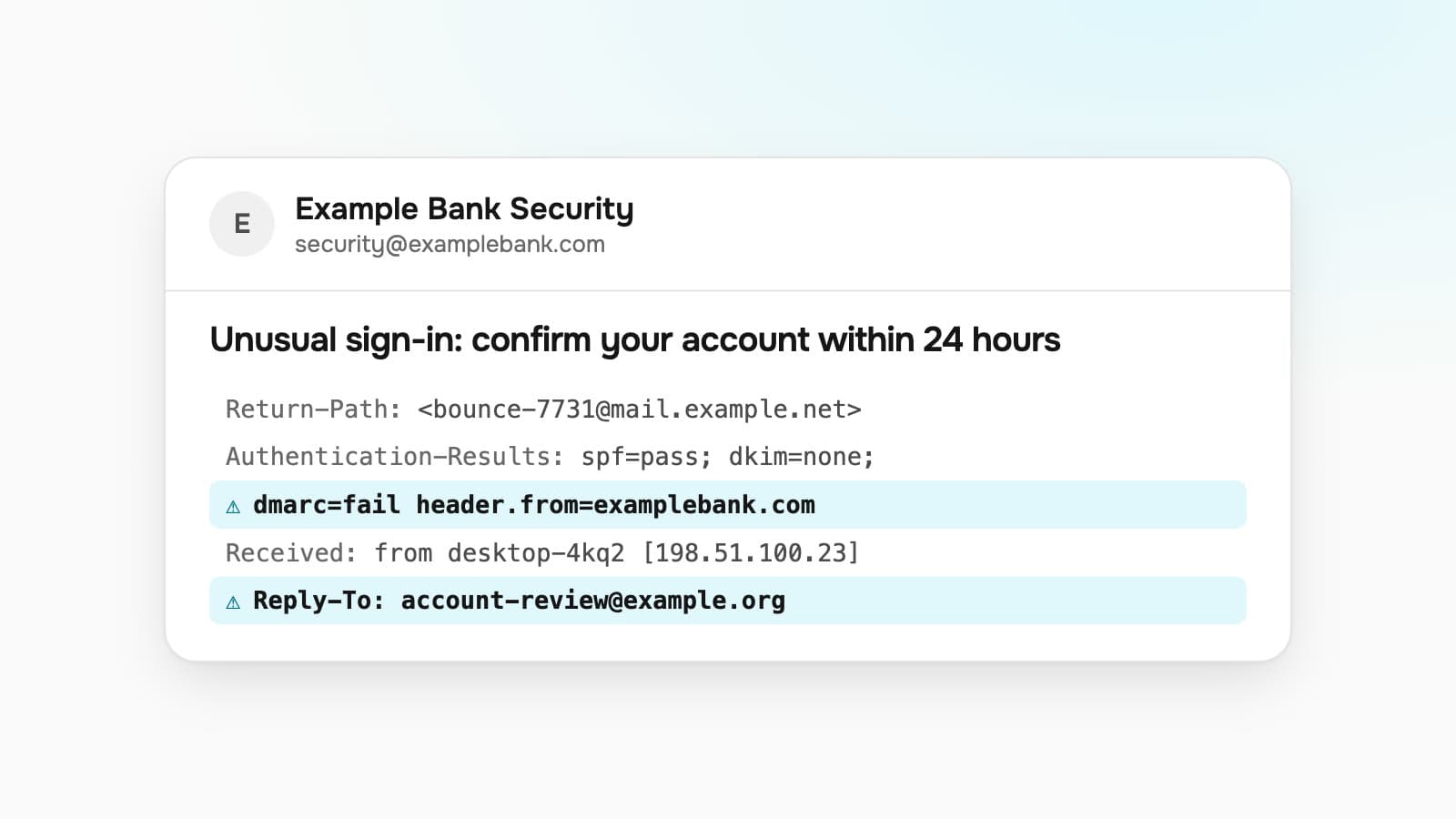
Read a suspicious email's headers line by line: From, Reply-To and Return-Path, the Received chain, and what SPF, DKIM and DMARC results really prove.
Check your address on Have I Been Pwned or Mozilla Monitor, read the result correctly, and act on what was exposed, in order of urgency. An incident-response guide.
What Gmail plus addressing, dots, googlemail.com, Workspace aliases and Send mail as really do, plus a step-by-step filter that labels mail and catches leaks.
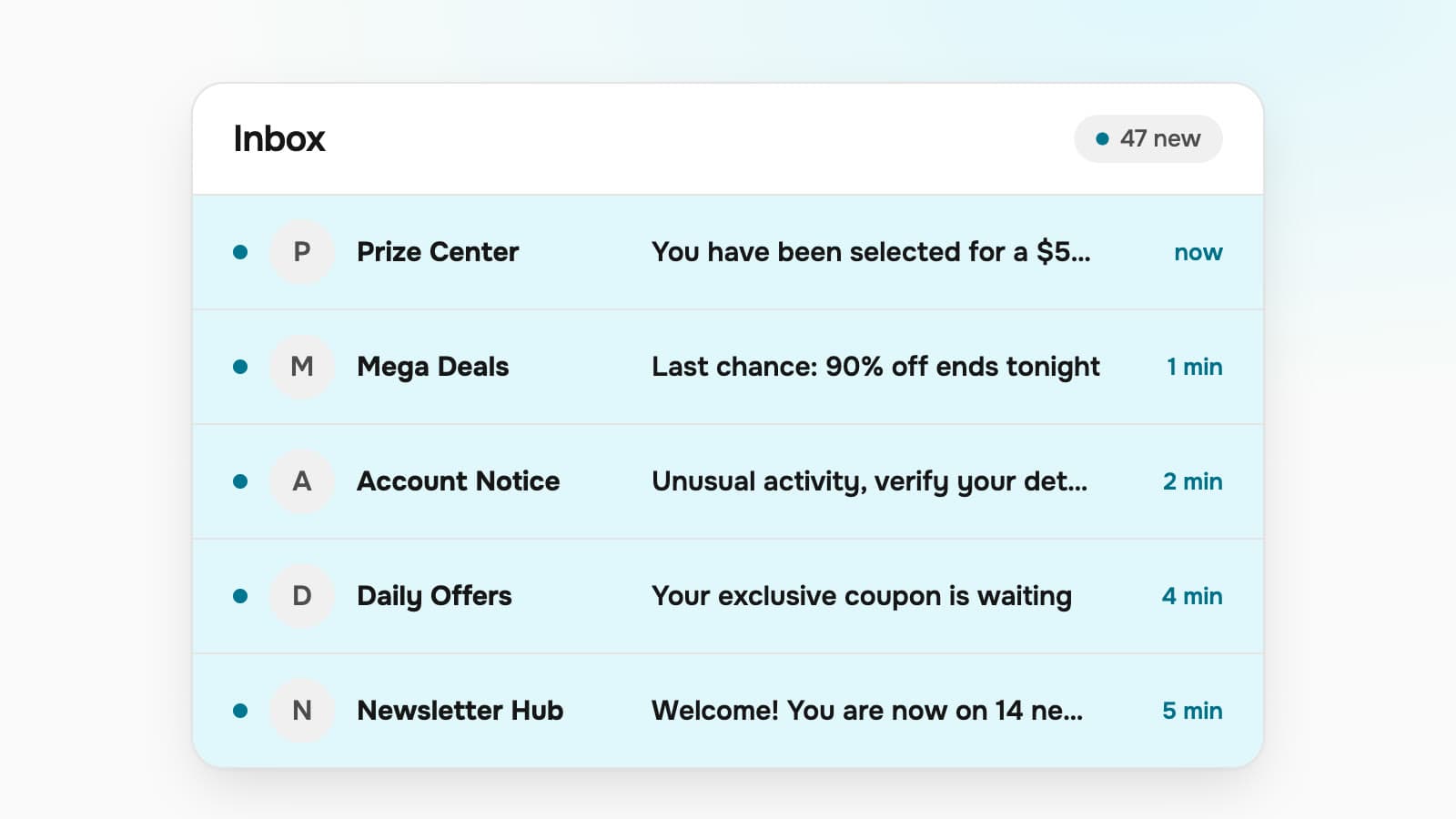
Spam reaches you through five doors: sign-up forms, breaches, scraped pages, guessed addresses and resold lists. How to tell which door is open and shut it.
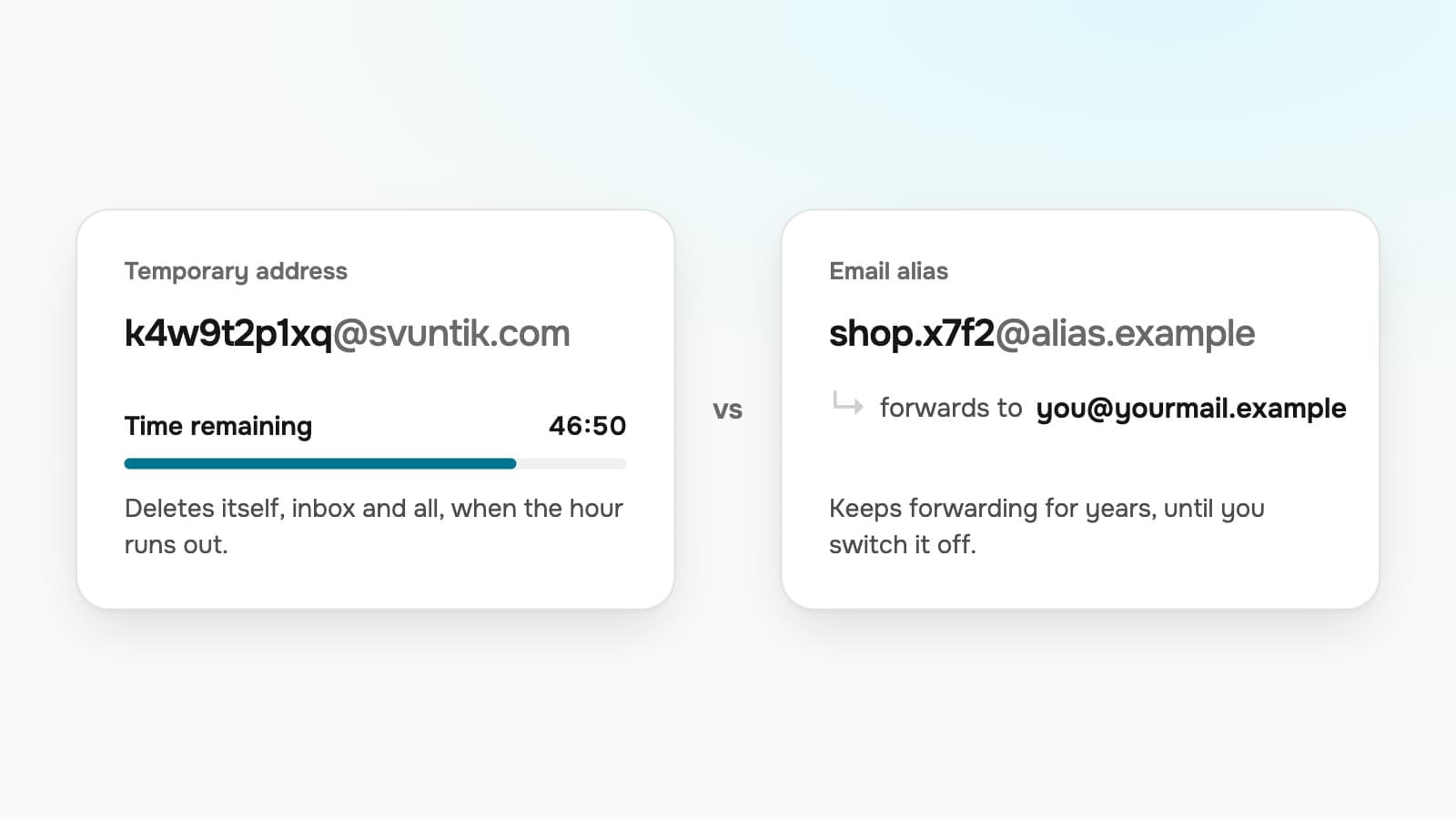
A temporary inbox expires and deletes itself; an email alias forwards to your real inbox for years. Compare both across eight tests, then pick by scenario.
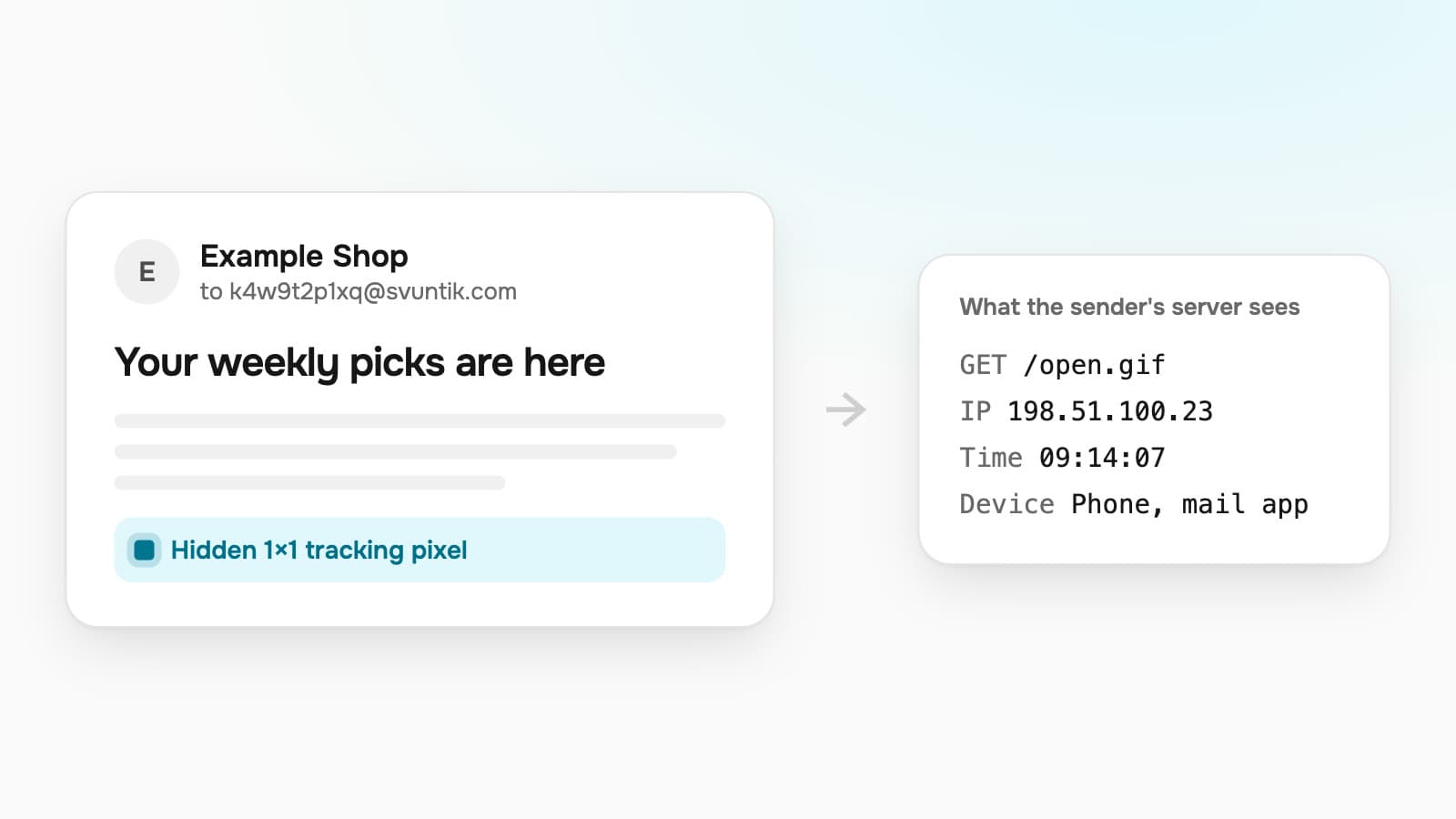
What a sender learns when you open an email, how one address links your accounts across sites, and the mail settings that close most of both leaks.
The servers, the blocklists, the alternatives and the history behind disposable email, from people who run one.
The exact timeline of an expiring PureTempMail address, what senders and websites see afterwards, why it can't be restored, and what to try if an account is tied to it.
Spam share, phishing volume, breach counts, disposable domain lists and spam fines for 2026, each figure with its source and date so you can cite it.
Why websites block disposable email, seen from the site owner's desk: the abuse and bounce costs behind it, how detection works, and what you can do instead.
How temporary email works, traced through the code that runs PureTempMail: one message from the SMTP handshake to your screen, then to deletion.

The history of disposable email as a dated, sourced timeline: from the first spam in 1978 to Mailinator, 10 Minute Mail, blocklists and Apple's Hide My Email.

We run PureTempMail, so we checked it against five rivals on inbox privacy, lifetime, attachments and ads. Here is where each one wins, including where we lose.
Is disposable email safe? Yes for low-stakes sign-ups, no for anything you need to recover. The real risks, who exploits them, and how to avoid them.